AI is already in your teams, but it doesn’t scale: it’s a wall

By Xavier Franco, CEO de Elternativa · Grupo Zemsania
· 7 min read
Written with the help of AI and reviewed by Xavier Franco
In this article
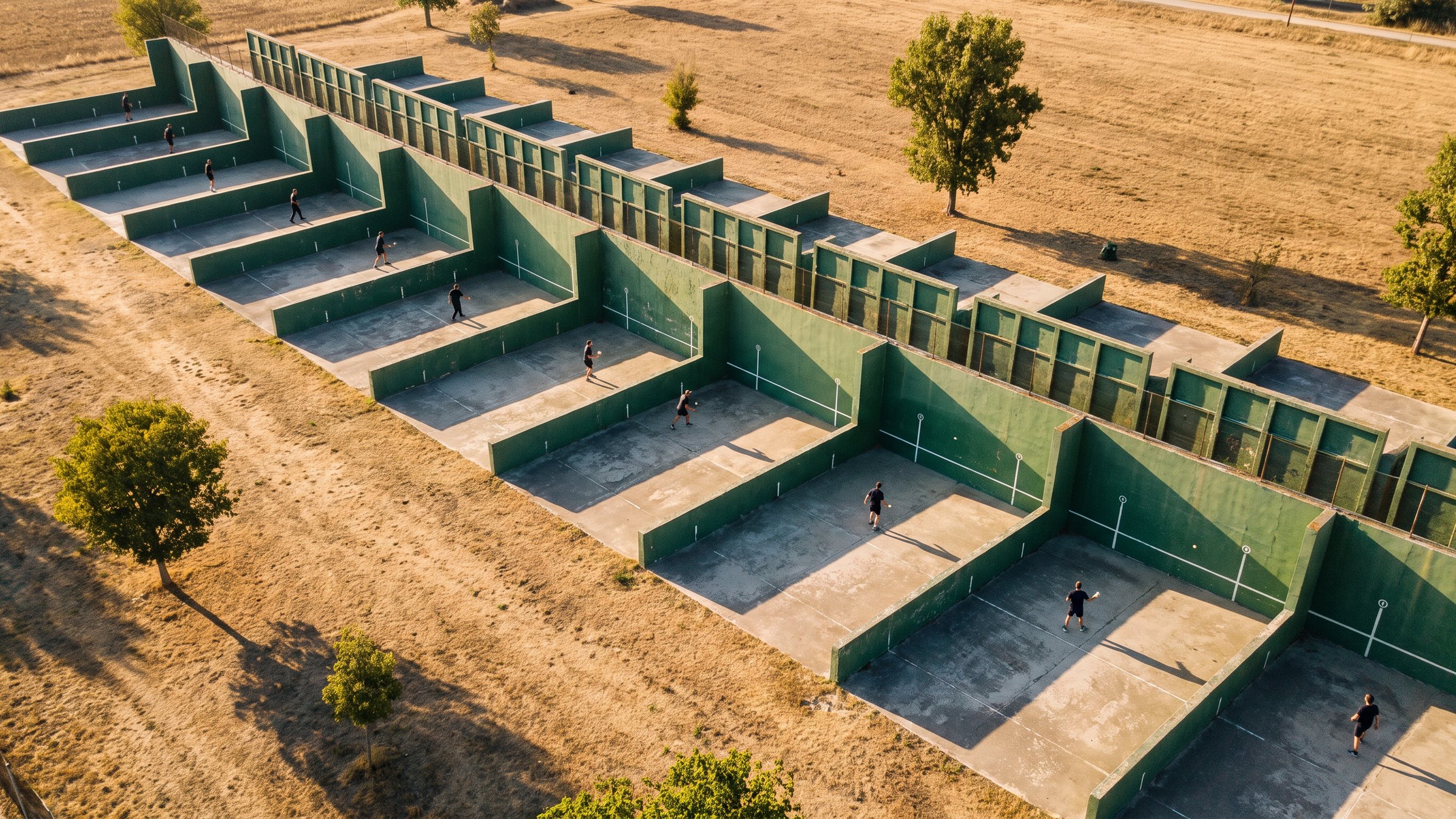
I explain it with an image: today, in almost every development team, AI is a wall. The developer throws a request at it, waits for it to come back, looks at it, corrects it and throws it again. It works. But it doesn’t scale. And if you run technology, you should understand why, because you are paying for something that could deliver far more.
AI for coding is already inside
Nobody disputes that teams use AI for coding. According to the 2025 Stack Overflow survey, with more than 49,000 responses, 84% of developers already use it or plan to. The question is no longer whether it comes in, but how it works once inside.
And the most common way is the wall: one person, one AI and one conversation. Everyone with their own tool, their own way of asking and their own tricks. What one person learns stays in their conversation. What another solves gets solved again tomorrow at the next desk.
In practice: ask your team how many different AI tools they use and how they decide what to ask them. If every answer is different, you have several walls, not a team.
The dead time nobody measures
The wall has a cost that appears on no invoice: waiting. While the AI thinks, the person waits. When the answer comes back, it has to be read, understood and decided on. And then it starts again.
There is a study on this that I find very honest. In July 2025, METR, an independent lab, ran a controlled trial with 16 experienced developers working on 246 real tasks from their own projects. With AI they took 19% longer. The striking part is not the figure but the perception: before starting they expected to be 24% faster, and afterwards they still believed AI had sped them up by 20%.
I’m not telling you this to say AI is no good. It is good, very good. I’m telling you because it shows that the feeling of speed is not speed. One person alone with their AI can feel faster and deliver the same or less.
In practice: don’t measure AI by what your team tells you. Measure deliveries, time to production and rework, before and after.
The double bill
The wall also has a visible cost. You pay for each person’s AI tool licence and you keep paying the person for the time spent waiting, reviewing and repeating. It is a double bill for the same work.
And there is a third, quieter cost: disorder. When each person works with their AI in their own way, the same thing ends up solved two different ways in two parts of the system. Nobody knows what a person wrote and what a model wrote. And what is learned doesn’t go back into the project: it stays with whoever did it.
Several engineers with AI are not a team with AI.
From the wall to the team
What changes the result is not a better tool. It is orchestrating the ones you already have so they work as a team. In practice, that means:
- A common method for all the AIs. Every task is born with its contract: what has to be done and the criteria by which it will be accepted, set before starting.
- Several instances in parallel. Instead of one person waiting for one AI, several development instances work at the same time, unattended, with tasks split between them and without stepping on each other.
- A role for each one. One builds, another tests. Whoever writes the code is not who validates it.
- A person who decides. Your team defines the work and validates each delivery by looking at the code. The sign-off is recorded.
- Knowledge that stays. Rules, decisions and lessons learned live in a system that the next task already receives, not in a conversation nobody will read again.
The role of your people changes: they stop playing against the wall and move on to defining and validating. It is more valuable and less repetitive work.
In practice: pick a repeatable type of work, such as enhancements or technical debt, and try writing the acceptance criteria before asking the AI. You will see how the review changes.
With the AI you already pay for
An important clarification: this isn’t about switching tools. Claude Code, Cursor, Codex, Copilot or Windsurf will do. What they lack is not power but a method and someone to split the work. It’s like having good musicians without a conductor: each plays their part well, but it doesn’t sound like an orchestra.
Nor is it about removing people. It is about letting the same team put into the plan what doesn’t fit today: technical debt, legacy, or that migration that always gets postponed.
What is learned, stays
There is an effect of the wall that I find the most expensive in the long run: learning doesn’t accumulate. When one person discovers that the AI always gets the same thing wrong, they fix it in their conversation and move on. Tomorrow, another person on the team trips over the same thing. And the day after, another.
In an orchestrated team the opposite happens. Every error caught during validation becomes a written rule that the next task already receives: a style rule, an architecture decision or a case that must always be tested. The method is defined once, applied always and learns from every error.
That has a very practical consequence: knowledge stops living in people and their conversations and starts living in the project. If someone changes team or leaves, the method carries on. Turnover doesn’t stop the service.
And it has another consequence I find just as important: traceability. When each task has its contract, its execution and its validation recorded, you know what a person wrote and what a model wrote, who validated it and how much it cost. That, which is impossible with the wall, is what lets you truly measure whether AI is delivering.
In practice: look back over the last month for an error the AI made twice in your team. If it isn’t written down anywhere as a rule, it will happen again.
Where to start
- Measure today deliveries per week, review time and rework, on your own repository.
- Pick a bounded service you already have: an enhancement, an application, a debt backlog.
- Give it method: a contract with criteria, instances in parallel, separate testing and validation by a person.
- Run it in parallel with your usual service for a few weeks.
- Compare cost, lead time and quality with your own data and decide whether to scale.
How we help
At Agentic Data & Software Engineering we orchestrate your AI development platforms so they work in parallel, unattended and governed, across the whole software lifecycle: each task with its contract, testing done by a different instance and a person on your team who validates each closure. The code stays in your Git and the knowledge in a database you own.
We do it with Agentagile, our methodology for developing with AI: we don’t build new agents, we turn the AI you already have under contract into a team that works with method.
How many hours does your team spend waiting for AI?
In a demo we show you how several development AIs work in parallel, with tasks split between them, while your team defines and validates.